
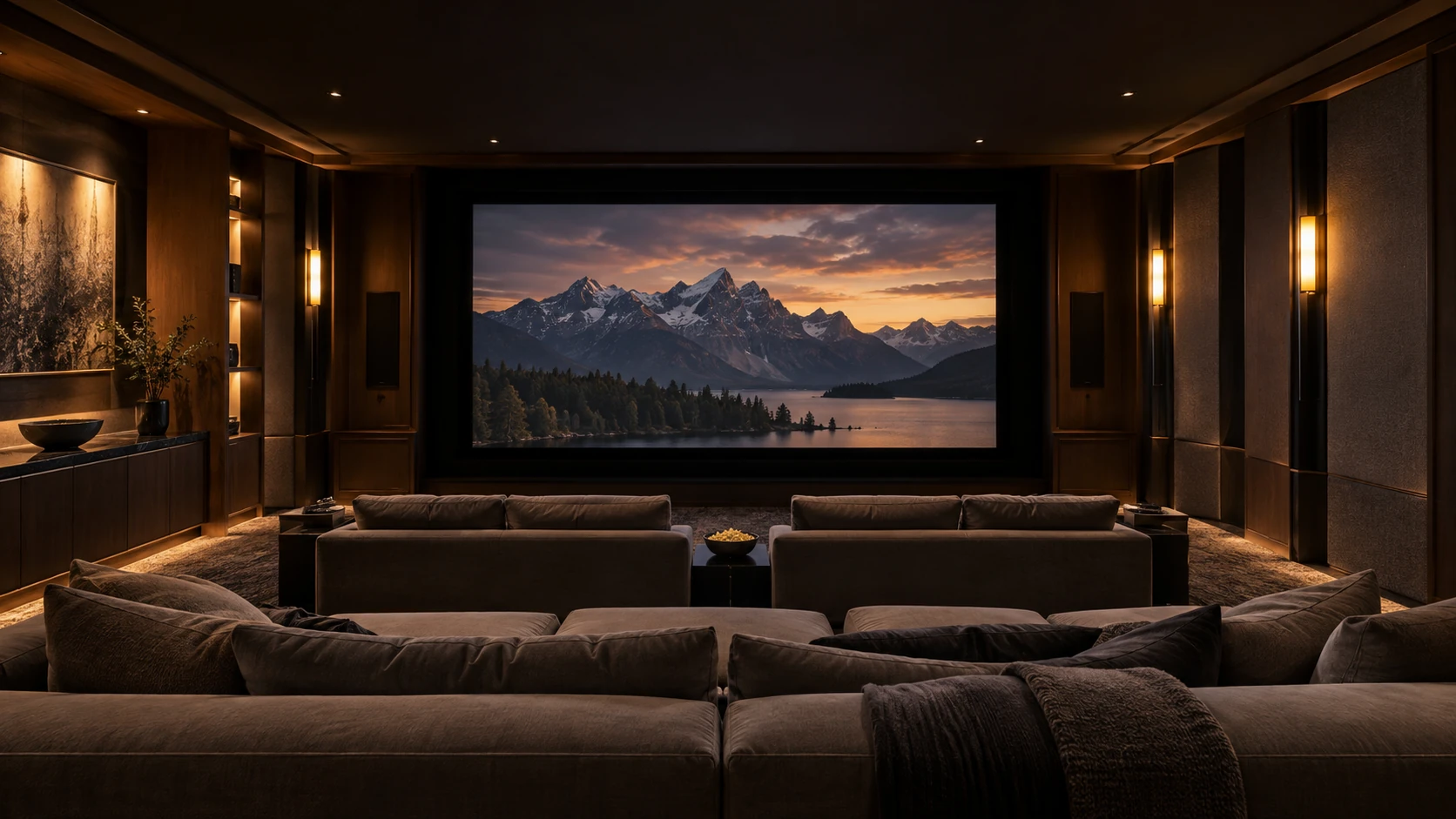
Home Theater Ideas
Cinema-grade seating, acoustic panels and lighting design for an immersive movie experience. 6 styles + 6 cinematic palettes.
- 6 home theater styles + 6 mood palettes
- 60-second photo-real renders
- Free to start


- Styles
- 6Styles
- Palettes
- 6Palettes
- Render time
- 60sRender time
- Designers
- 10K+Designers
Home Theater Design Generator
Our AI Home Theater Generator turns any photo of your home theater into a fully styled concept in under 60 seconds. Test layouts, palettes, and trending finishes before you commit a single dollar to a refresh or renovation.
6 AI Home Theater Styles to Inspire You
From minimalist to maximalist — find your aesthetic and visualize it instantly.
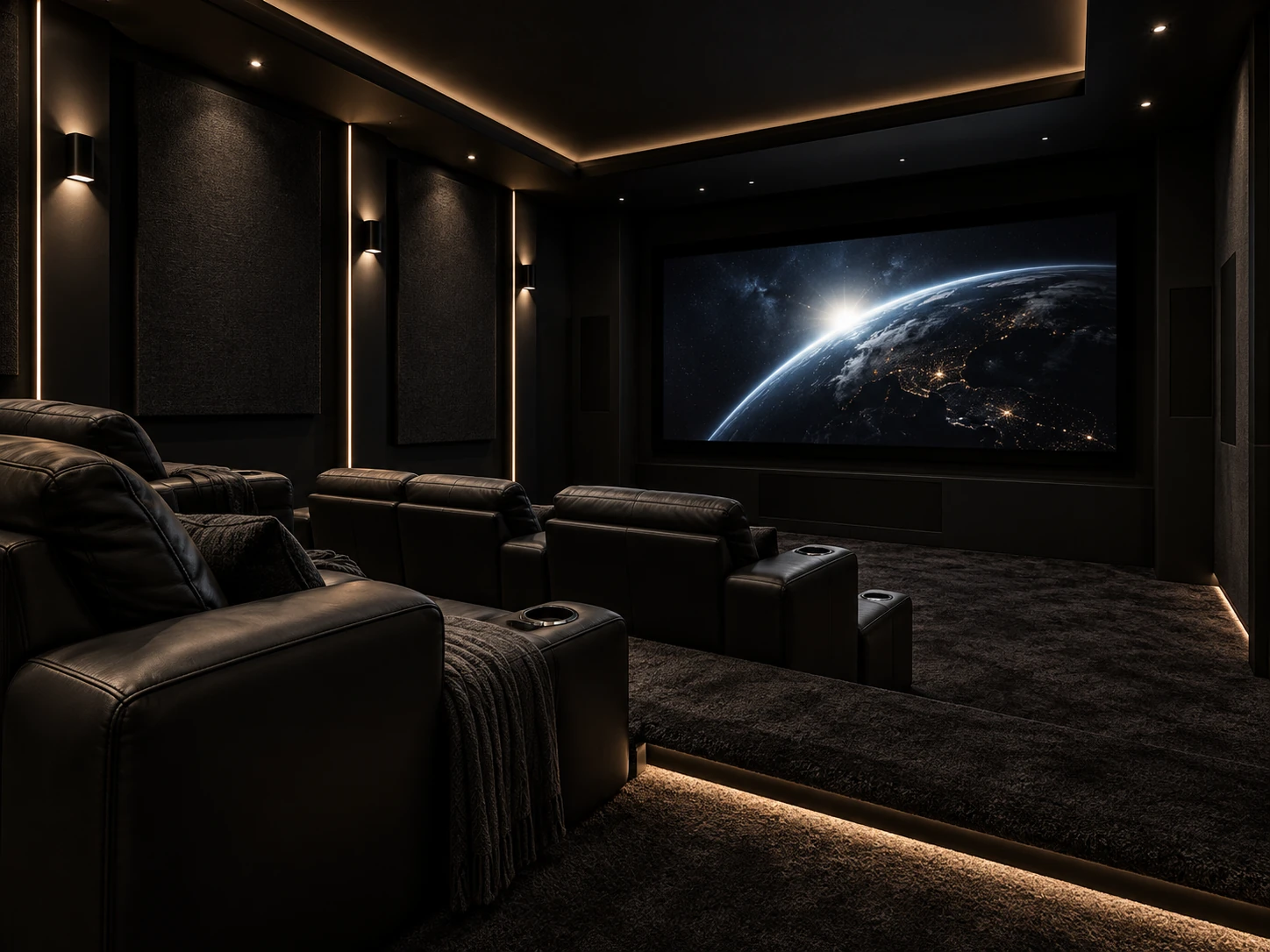
Cinema Black
Black walls, tiered seating, acoustic panels.
Best for: dedicated theaters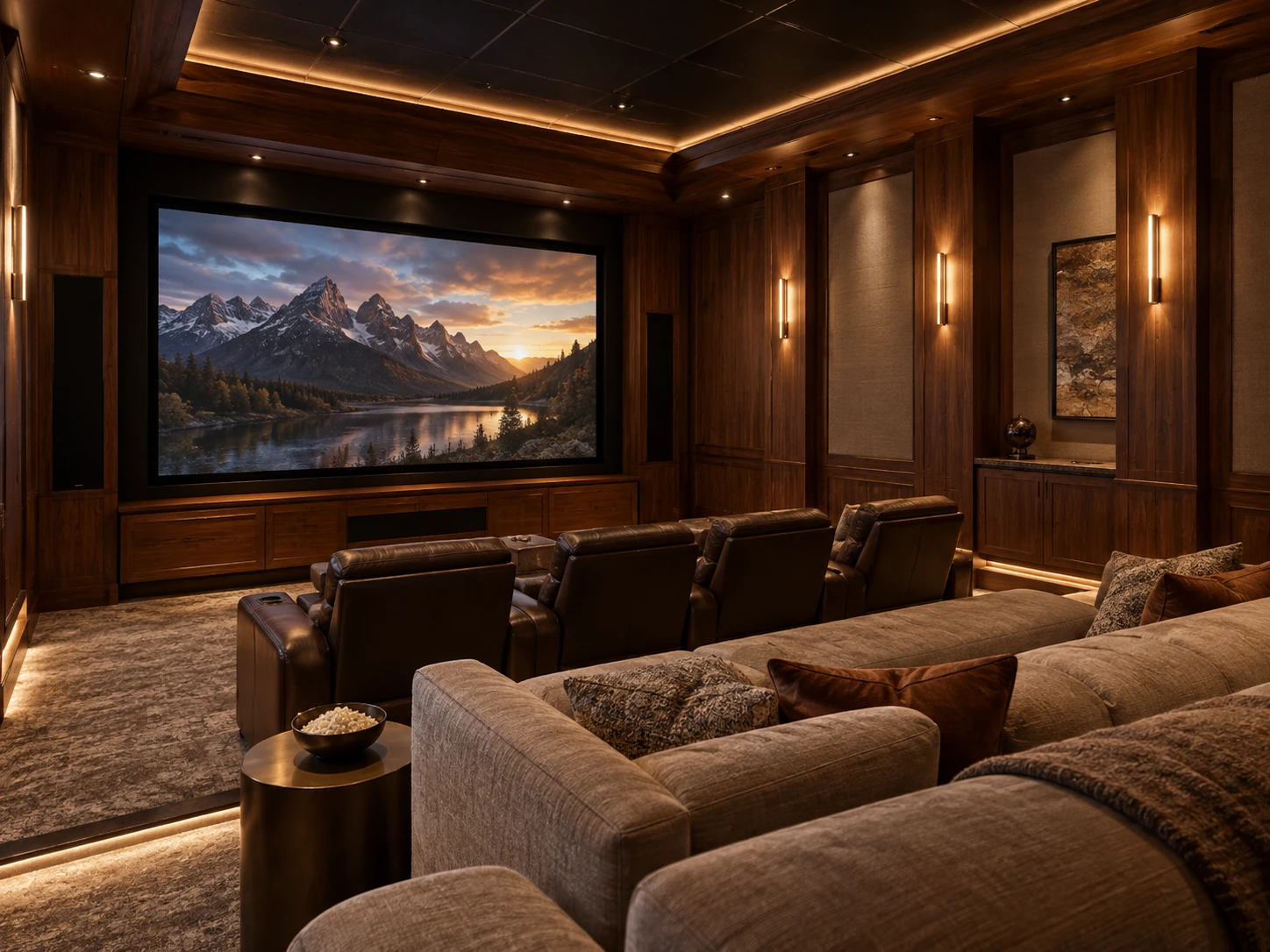
Walnut Cinema
Wood paneling, warm lighting, plush seating.
Best for: luxury movie rooms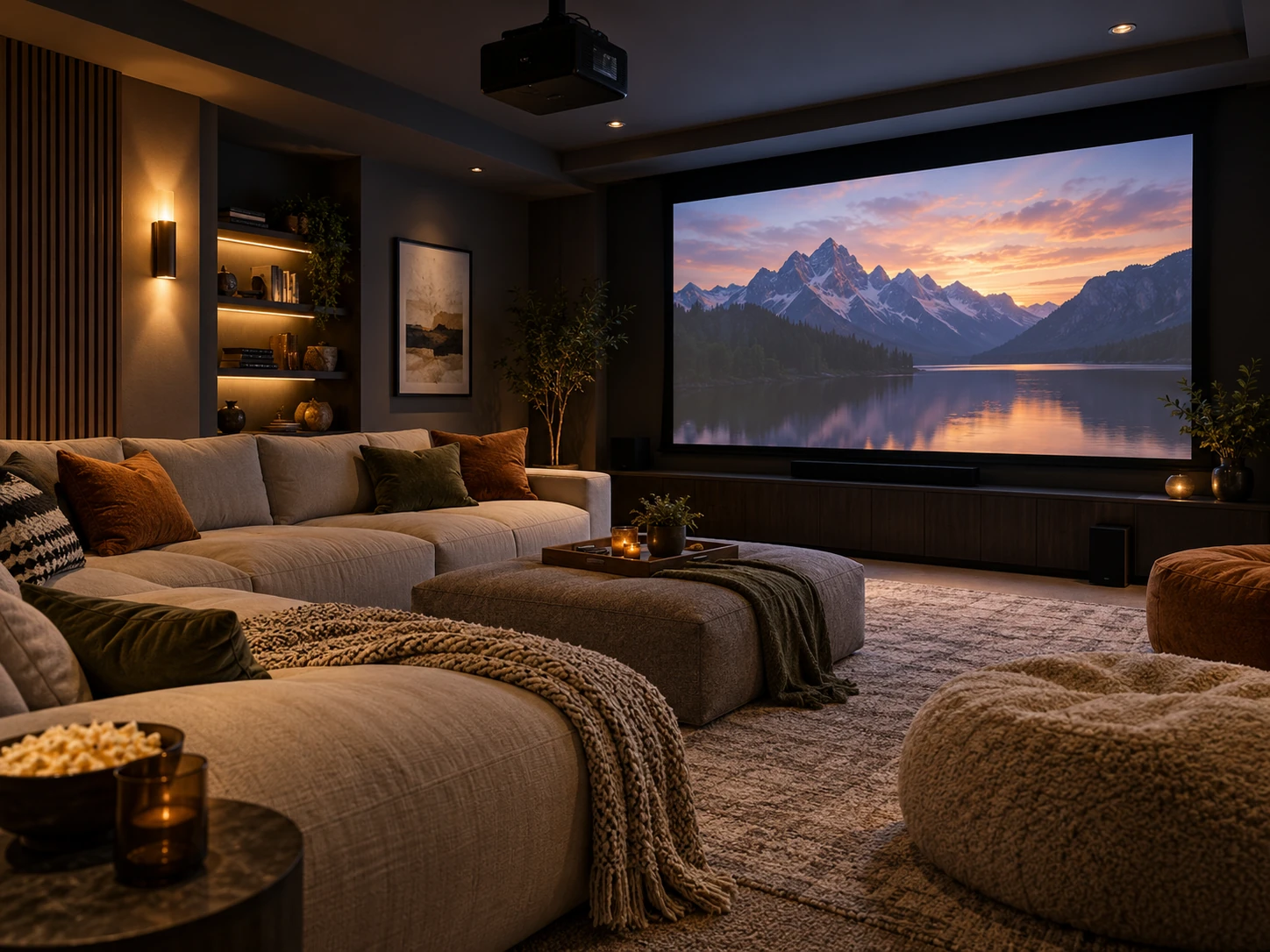
Screening Lounge
Modular sofa, projector, relaxed layout.
Best for: casual movie nights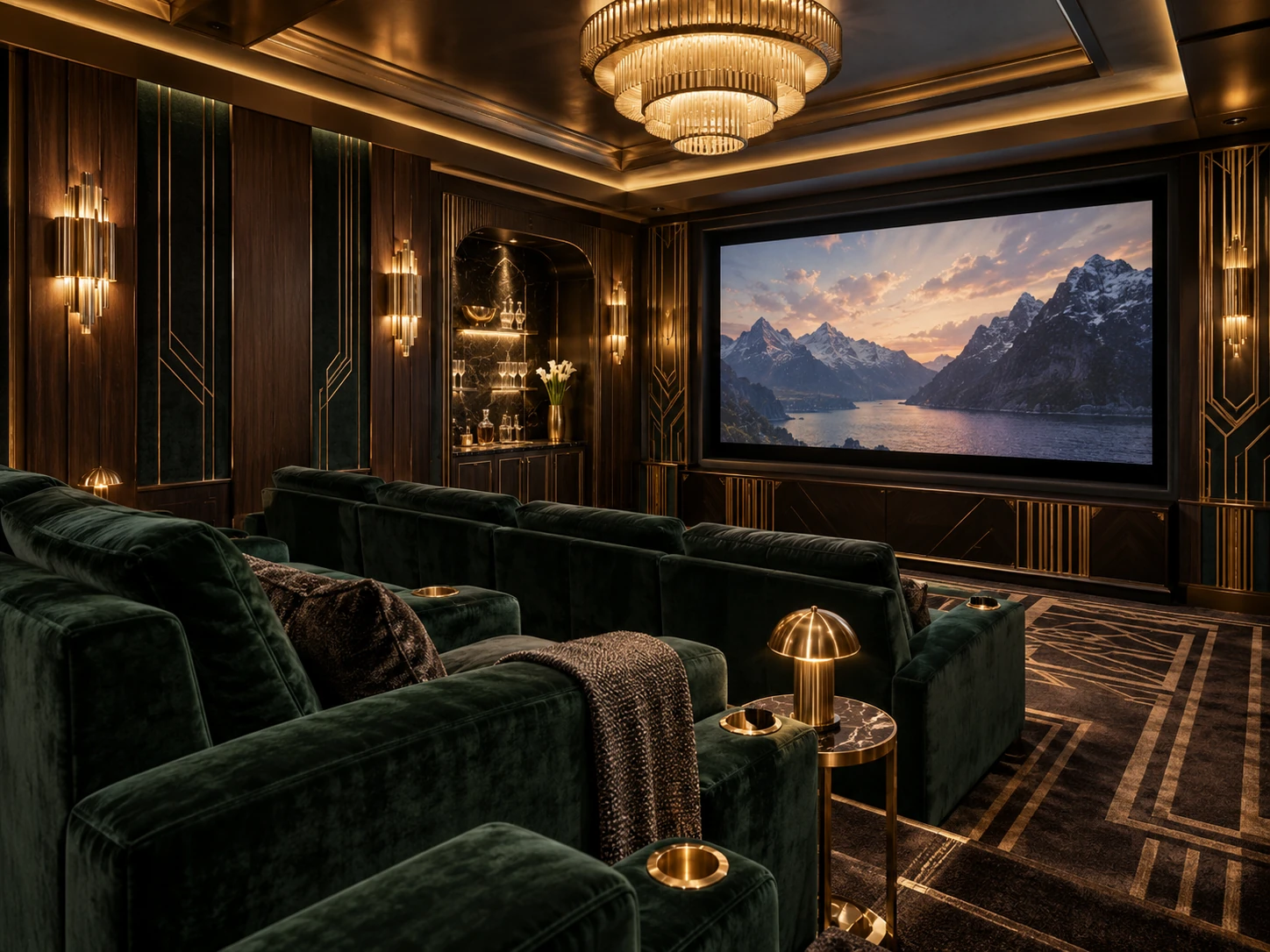
Neo-Deco Theater
Velvet seating, dark wood, brass lighting.
Best for: glamorous interiors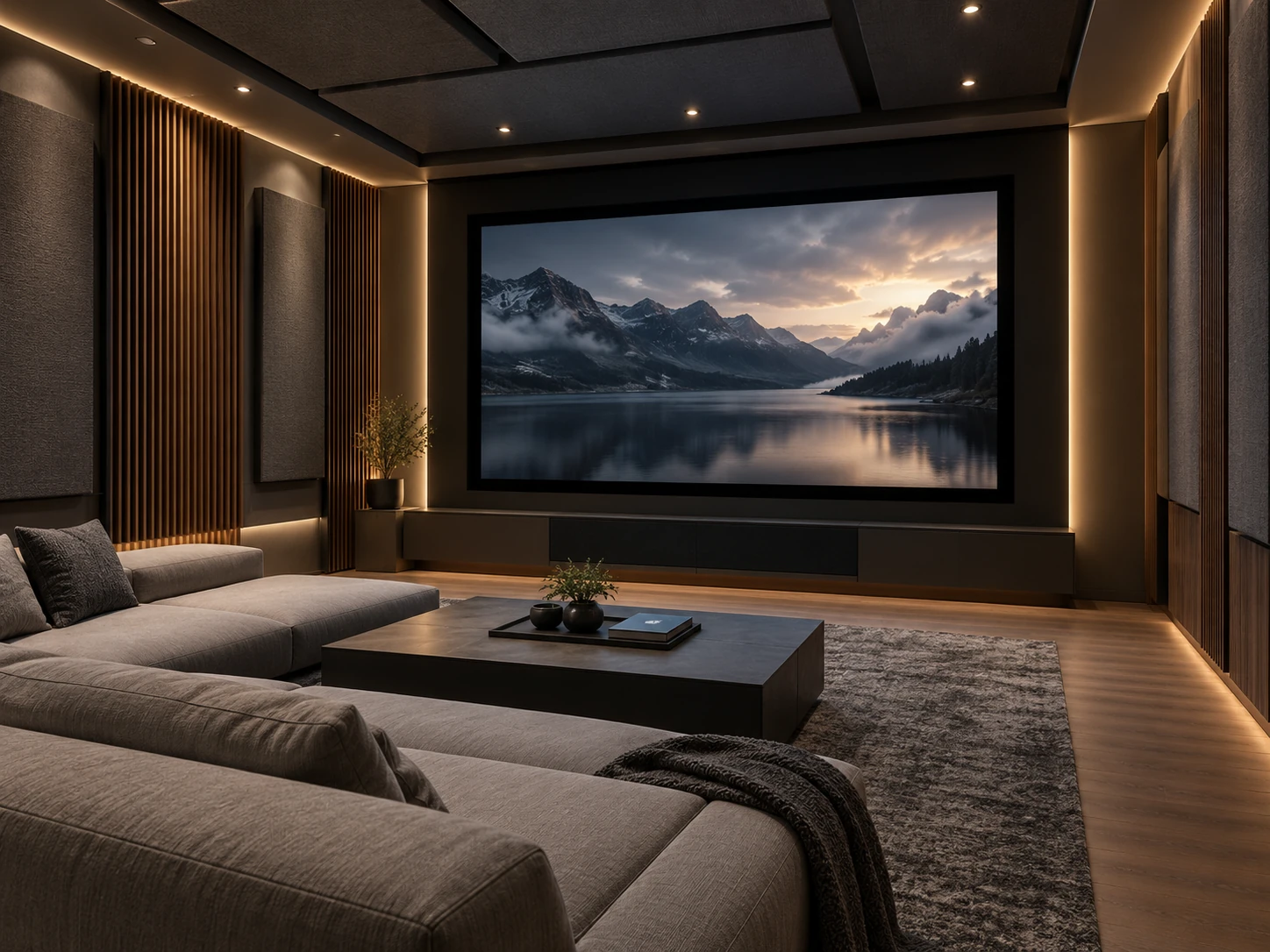
Acoustic Studio
Sound panels, hidden speakers, minimal finishes.
Best for: audio enthusiasts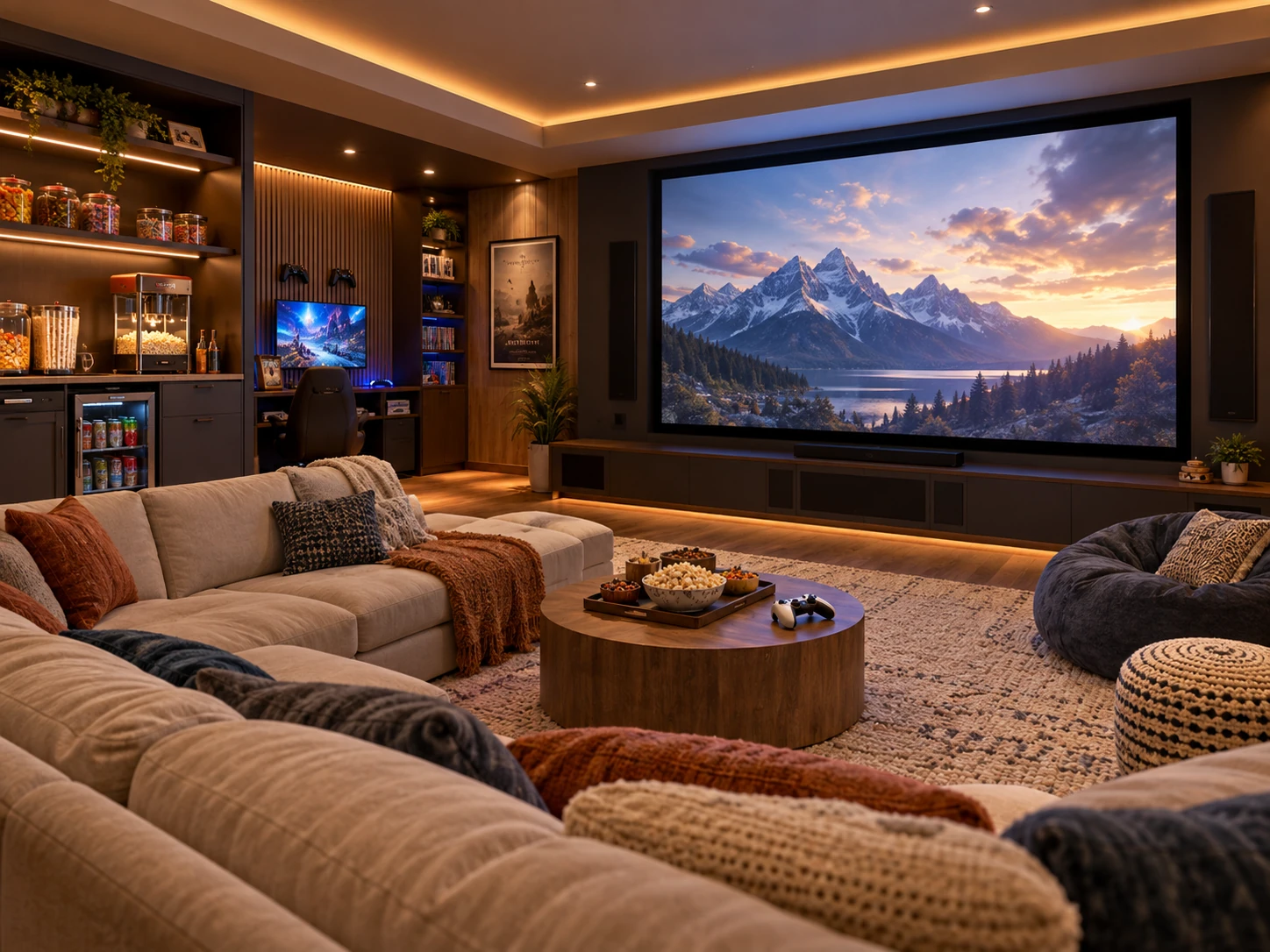
Family Media Room
Large sofa, gaming setup, snack storage.
Best for: family entertainment
Curated Home Theater Palettes for Every Mood
6 designer-approved color combinations to set the perfect tone.
Velvet Plum
Romantic jewel-tone luxury
Best for: statement roomsEmerald & Brass
Saturated green with metallics
Best for: bars + librariesSapphire Drama
Inky blue depth
Best for: theaters + densBurgundy Wine
Rich oxblood reds
Best for: dining roomsBlack & Brass
Hospitality-grade contrast
Best for: speakeasy barsCobalt Pop
Saturated blue accent
Best for: gaming + creative
Smart Home Theater Space Planning
Data-driven furniture placement and spatial strategies that actually work.
Viewing Distance
Sit 1.5× the screen width back. For a 120-inch projection screen, that's 13-15 ft. For a 75-inch TV, 8-10 ft.
Seat Risers
If you have a second row, build a 12-inch riser so back-row sightlines clear the front-row heads.
Acoustic Treatment
Cover 25% of wall surface with absorption panels (2 inches thick, 60×24 inches) to eliminate echo and bass boom.
Light Control
Blackout drapery (≥99% light blocking) plus dark walls (LRV under 30) yield true cinema-grade contrast.
Common Home Theater Mistakes & How to Avoid Them
Pro tips on what NOT to do — and what works instead.
Three-Layer Lighting
Don'tRely on a single overhead in your home theater — flat, harsh light.
DoCombine ambient ceiling, task at work surfaces, and accent at art on dimmers.
Tonal Palette
Don'tUse 5+ saturated colors in one home theater — visually chaotic.
DoApply 60-30-10: 60% dominant, 30% secondary, 10% accent in tonal harmony.
Right-Sized Furniture
Don'tCram oversized pieces into a tight home theater.
DoMeasure clearances first, then choose furniture scaled to room dimensions.
Single Focal Point
Don'tSpread visual weight evenly with no anchor — feels disorganized.
DoPick one focal point and arrange everything in the home theater around it.
Texture Mix
Don'tStick to one fabric or finish everywhere — feels lifeless.
DoMix at least 3 textures (wood, textile, metal/stone) for tactile depth.
2026 Home Theater Design Trends
The latest home theater trends shaping interiors this year.
- Tech2026
Laser Projectors
Ultra-short-throw 4K laser projectors (Hisense L9, Samsung Premiere) replace bulky long-throw setups.
- Drama2026
Star Ceilings
Fiber-optic 'star field' ceilings have returned as a high-end signature.
- Audio2026
Dolby Atmos Standard
7.1.4 surround setups with overhead speakers are now the home-theater baseline.
- Hospitality2026
Concession Bars
Built-in popcorn machines, bar fridges and candy displays make the room a true destination.
What Designers & Realtors Say
Real users on how AI home theater design changed their workflow.
"Clients who could not read a floor plan can read a rendered home theater just fine."
Felix LindqvistRenovation Consultant "It lets us show ownership the home theater plan without paying for a full design package."
Kenji WatanabeProperty Manager
Frequently Asked Questions
Everything you need to know before getting started.
What size space does a home theater need?
Most home theaters work in 100-200 sq ft. Home gyms need 8'6" minimum ceiling and 35 sq ft per machine; theaters need 1.5x screen-width viewing distance; gaming rooms need 6 ft of desk width per station.
What is the cost to build a home theater?
Basic home theater setups (paint, furniture, equipment) start at $2,000. Mid-range builds with custom storage and pro-grade equipment run $10,000-$30,000. High-end home theaters with built-ins exceed $50,000.
What flooring works best in a home theater?
Match the floor to the activity: rubber for gyms, plush carpet or acoustic underlay for theaters, sealed concrete for craft and bar spaces, and engineered wood with rugs for libraries and meditation rooms.
How do I light a home theater properly?
Specialty rooms need scenes, not single switches. Use dimmable LED on multiple zones, add task lighting at every work surface, and consider colored or smart bulbs for theaters and gaming setups.
Can I add a home theater to a basement or attic?
Yes - both are popular home theater locations. Confirm minimum 7 ft ceiling, add proper insulation and ventilation, address moisture in basements first, and plan dedicated electrical circuits for equipment.
Explore more functional room ideas
Ready to Design Your Home Theater?
Visualize home theater concepts with AI in 60 seconds.
- Instant room makeovers
- Professional staging
- Virtual tour and more